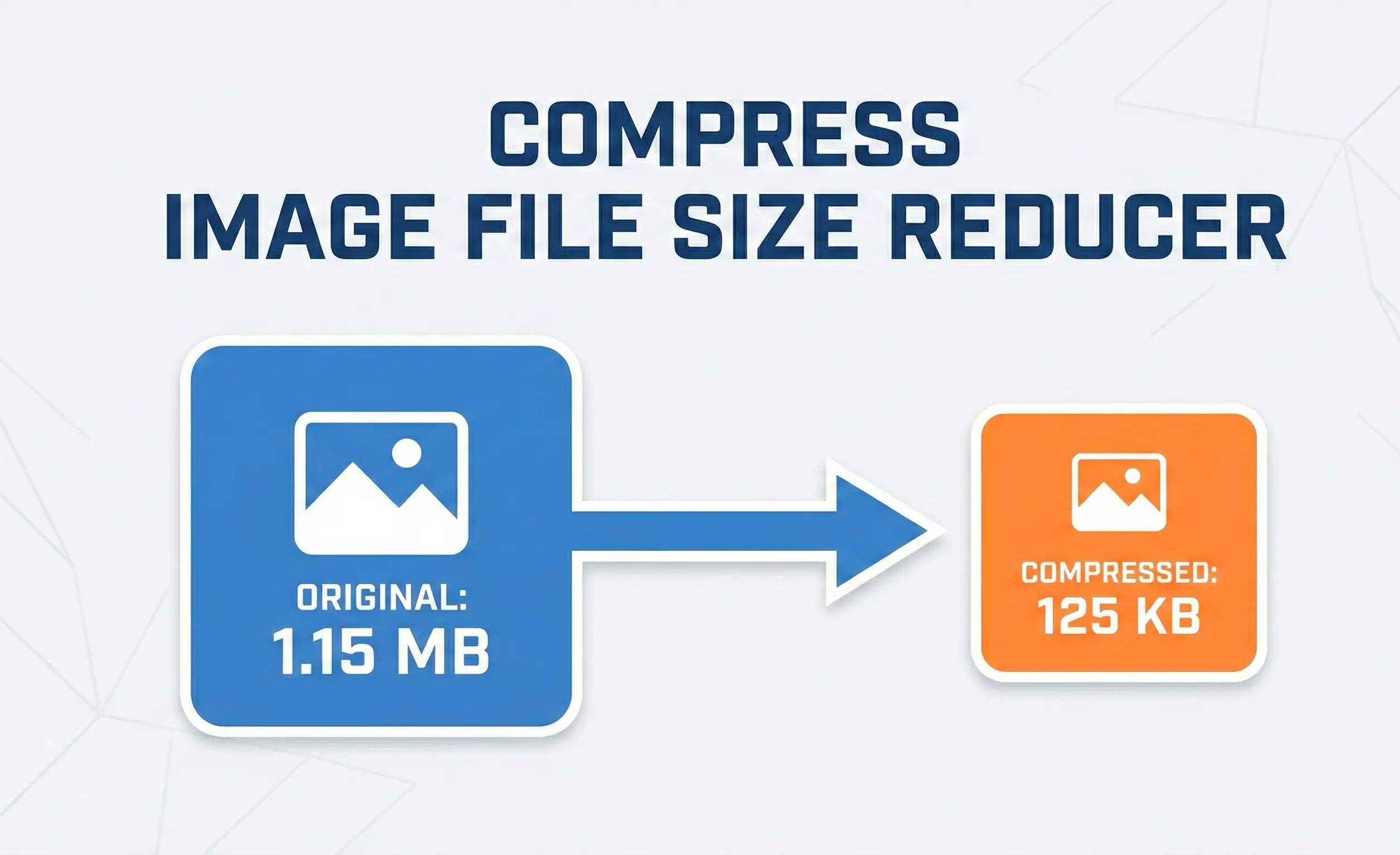






In today's digital world, images dominate the web - accounting for over 60% of a typical webpage's weight. Whether you're a web developer, photographer, marketer, or casual user, understanding how to reduce image file sizes across different formats is essential for performance, storage, and user experience.
1. Introduction to Image Compression
Image compression is the process of reducing the file size of an image without significantly degrading its visual quality. It's achieved through various algorithms that remove redundant or imperceptible data. Our universal tool applies format-specific compression techniques to achieve optimal results for each image type.
🎯 Key Benefits of Image Compression
- Faster page load times (improved user experience)
- Reduced bandwidth costs (save money on hosting)
- Better SEO rankings (Google favors fast sites)
- More storage space (fit more images on devices)
- Faster backup and transfer times
2. Lossless vs Lossy Compression
Lossless Compression
- • Perfect quality, no data loss
- • Best for PNG, GIF, BMP
- • Reduces size by 20-50%
- • Ideal for graphics, logos, screenshots
- • Preserves transparency
Lossy Compression
- • Adjustable quality vs size
- • Best for JPEG, WebP photos
- • Reduces size by 40-90%
- • Small quality loss acceptable
- • Maximum file reduction
3. JPEG Optimization
JPEG (Joint Photographic Experts Group) is the most common format for photographs. It uses lossy compression that discards color information the human eye is less sensitive to.
JPEG Optimization Techniques:
- Quality adjustment: 70-85% quality offers best balance
- Chroma subsampling: 4:2:0 reduces color data without visible loss
- Progressive JPEG: Loads in passes for better perceived performance
- Optimize Huffman tables: More efficient encoding
- Remove EXIF data: Strip camera metadata (can save 10-30KB)
💡 Pro tip: For web use, JPEG at 80% quality is often indistinguishable from original but 40-60% smaller.
4. PNG Compression
PNG (Portable Network Graphics) is ideal for images requiring transparency, sharp text, or lossless compression. It uses DEFLATE compression similar to ZIP files.
PNG Optimization Strategies:
- Color palette reduction: Convert 24-bit to 8-bit (PNG-8) for 70% savings
- Filtering: Apply pre-compression filters (Paeth, Sub, Up, Average)
- Alpha optimization: Compress transparency channel separately
- Remove gamma chunks: Strip unnecessary metadata
- PNG quantization: Lossy reduction with dithering
| PNG Type | Colors | Use Case | Size vs Original |
|---|---|---|---|
| PNG-24 | 16.7M | Photos, gradients | 100% |
| PNG-8 (256) | 256 | Graphics, logos | 30-40% |
| PNG-8 (16) | 16 | Simple icons | 15-20% |
5. WebP - The Next-Gen Format
Google's WebP format combines the best of JPEG and PNG:
- Lossy WebP: 25-35% smaller than JPEG
- Lossless WebP: 26% smaller than PNG
- Supports transparency and animation
- 96% browser support
Our tool applies WebP-specific optimizations including predictive filtering, arithmetic coding, and alpha channel optimization.
6. GIF Animation Optimization
GIF remains popular for simple animations, though it's limited to 256 colors.
GIF Optimization Tips:
- Reduce colors: Use minimum color palette (16-128 colors)
- Frame optimization: Remove duplicate frames
- Disposal methods: Use "do not dispose" where possible
- Lossy GIF: Acceptable for some animations
- Convert to video: Consider MP4 for complex animations
📊 GIF vs WebP: Animated WebP is typically 64% smaller than GIF with better quality and 24-bit color.
7. BMP Compression
BMP (Bitmap) is an uncompressed format, leading to huge file sizes. Our tool provides two strategies:
- RLE compression: Run-length encoding for simple images (up to 50% reduction)
- Convert to PNG: Much better compression (90-95% reduction)
For web use, we strongly recommend converting BMP to PNG or JPEG for 90%+ file size reduction.
8. TIFF Optimization
TIFF is common in photography and printing but not web-friendly.
TIFF Compression Options:
- LZW compression: Lossless, 30-50% reduction
- ZIP compression: Better than LZW, 40-60% reduction
- JPEG compression in TIFF: Lossy option
- Remove extra layers: Flatten multi-page TIFFs
- Convert to JPEG/WebP: For web use, 80-95% reduction
9. Smart Resizing for Maximum Reduction
Resizing is the most powerful optimization technique. Reducing dimensions by 50% reduces pixels by 75%, leading to ~75% smaller files.
Recommended dimensions by use case:
- Web content: 1200-1600px width
- Email newsletters: 600-800px width
- Social media: varies by platform (check current specs)
- Thumbnails: 150-300px width
10. Metadata Stripping
Images often contain hidden metadata: camera settings, GPS coordinates, timestamps, thumbnails, and color profiles.
Our tool strips:
- EXIF data (camera make/model, settings, GPS)
- ICC color profiles (optional)
- XMP metadata
- Embedded thumbnails
- Comments and descriptions
Typical savings: 5-15% additional file size reduction, plus privacy protection (removes GPS).
11. Batch Processing
Our tool supports up to 10 images simultaneously, saving time when optimizing entire folders. Batch processing is essential for:
- Website migrations (optimize all images at once)
- E-commerce product catalogs (hundreds of product images)
- Photography shoots (compress entire sessions)
- Email campaigns (multiple images per newsletter)
All files are processed in parallel for maximum speed, with individual progress tracking.
12. SEO Benefits of Image Optimization
Core Web Vitals
Smaller images improve LCP (Largest Contentful Paint) scores
Mobile Performance
Faster loading on cellular networks improves mobile rankings
Page Speed
Google's PageSpeed Insights rewards optimized images
Image Search
Properly optimized images rank better in Google Images
Studies show that image optimization can improve page load times by 40-60%, directly impacting user experience and search rankings.
Privacy & Security
Our universal image reducer processes everything locally in your browser:
- ✅ Zero upload - images never leave your device
- ✅ No storage - files exist only in memory
- ✅ Offline capable - works without internet
- ✅ No tracking - we don't use analytics
📋 Quick Reference: Best Format by Use Case
Photos / Realistic Images:
JPEG (lossy, 70-85%) or WebP
Logos / Graphics with text:
PNG (lossless) or SVG
Images with transparency:
PNG or WebP (lossless)
Animations:
GIF (simple) or WebP/MP4 (complex)
Print / Archival:
TIFF with LZW or PNG
Maximum compatibility:
JPEG for photos, PNG for graphics